
Views: 0 Author: Site Editor Publish Time: 2026-08-25 Origin: Site


Escalating power demands in modern IT environments push legacy infrastructure to its absolute limits. AI clusters, machine learning nodes, and dense virtualization require massive energy footprints that older facilities simply cannot support. Facility managers face a constant physical tension on the data center floor. They must maximize rack space utilization while managing strict physical constraints. Power delivery, cabling bulk, and thermal management dictate overall facility efficiency. Solving this requires a critical architectural decision before pulling any new copper. You must choose between single-phase and three-phase power distribution at the rack level. This choice dictates future scalability and facility compatibility. It determines the operational viability of any rack PDU deployment. Making the wrong choice leads to stranded capacity, overloaded circuits, and costly rip-and-replace upgrades that disrupt production workloads.
Density Dictates Phase: Single-phase is generally sufficient for low-to-medium density racks (under 5kW), while three-phase power mathematically delivers ~1.7x more capacity, making it the standard for high-density deployments.
Cabling and Airflow Trade-offs: Three-phase distribution reduces the total number of power cables required per rack, improving airflow and simplifying installation, despite the individual cables being thicker and heavier due to additional internal wires.
Cost vs. Scalability: While a three-phase rack PDU requires a higher initial CapEx (more copper, complex internal wiring), it lowers the cost per kilowatt at scale and prevents premature infrastructure obsolescence.
Upstream Dependencies: Rack-level power decisions cannot be made in a vacuum; the choice must align with the facility’s upstream UPS, panelboard architecture, and specific three-phase topology (Wye vs. Delta).
Evaluating power distribution requires understanding the fundamental physics of electricity delivery. Facilities receive high-voltage power from the utility grid. Transformers step this voltage down for internal distribution. The method used to route this power to individual server cabinets defines your infrastructure limits. IT equipment requires continuous, clean alternating current (AC). Delivering this current efficiently minimizes energy loss and heat generation. You must establish a technical baseline to evaluate distribution methods accurately. The core difference lies in how the alternating current waves are structured and delivered to the hardware. We see many facilities struggle because they miscalculate the relationship between upstream breaker capacity and actual rack-level draw.
Single-phase power represents the standard alternating current setup. It utilizes one active wire and one neutral wire. The active wire transmits the power to the load. The neutral wire provides the return path to complete the electrical circuit. The voltage alternates in a single sine wave pattern. This means the power output drops to zero twice per cycle. Most legacy IT equipment operates on this standard. Typical voltage ranges for single-phase distribution include 120V, 208V, and 230V. Standard amperage limits usually cap at 30A or 32A per circuit.
Pushing beyond these limits requires exceptionally thick copper wiring. This makes higher-amperage single-phase circuits impractical for dense server environments. A standard 30A, 208V single-phase circuit provides approximately 5kW of usable power. This capacity easily supports basic networking gear and standard 1U servers. However, it quickly falls short when supporting modern compute nodes. If you try to run a 15kW rack on single-phase, you end up pulling three or four separate 30A whips under the floor. That creates a massive physical bottleneck and wastes valuable panelboard space.
Three-phase power utilizes three distinct alternating currents. These currents are separated by 120 electrical degrees. This separation ensures that the power waves overlap continuously. The total power delivered never drops to zero. This overlapping wave structure provides a smoother, more consistent energy flow to the IT equipment. It allows facilities to deliver significantly more power using fewer wires. The mathematical advantage of three-phase power is substantial. It delivers the square root of 3 (approximately 1.732) times the power of a single-phase circuit at the exact same amperage.
This multiplier transforms facility capacity. Consider a standard US deployment example. A 30A 208V single-phase circuit yields roughly 5kW. A 30A 208V three-phase circuit yields approximately 8.6kW. This represents a massive real-world capacity jump. It allows facility managers to support heavier loads without upgrading the upstream circuit breakers or pulling thicker individual cables. When you scale this up to 60A circuits, the difference becomes even more pronounced, pushing well past 17kW on a single feed. You get more power density without multiplying the number of physical cables running to the cabinet.
Deploying three-phase power requires selecting a specific wiring topology. The two primary configurations are Wye and Delta. Delta configurations utilize three active wires and one ground wire. Delta lacks a neutral wire. It typically delivers higher voltages directly to heavy loads. Facility managers use Delta for large motors or massive server clusters requiring strictly 208V or 415V power. Because there is no neutral wire, you cannot split a Delta feed to provide lower voltages.
Wye configurations include a neutral wire alongside the three active wires and ground. This five-wire setup offers superior flexibility. The inclusion of the neutral wire allows a single unit to provide multiple voltages simultaneously. A Wye-configured unit can deliver 208V to heavy compute nodes while simultaneously providing 120V to basic networking switches from different receptacles. This eliminates the need to run separate 120V and 208V circuits to the same cabinet. You handle all voltage requirements through a single input whip.
Mapping kilowatt requirements to phase selection is the first evaluation step. Rack density dictates the power architecture. Low-density racks draw between 2kW and 5kW. These environments easily run on single-phase circuits. Medium-density racks pull between 5kW and 10kW. These racks often require multiple single-phase circuits or a basic three-phase setup. High-density racks draw anywhere from 10kW to over 30kW. Establishing hard thresholds prevents infrastructure bottlenecks.
Once a cabinet exceeds 10kW, deploying a high density rack PDU becomes mandatory. Attempting to power a 15kW rack with single-phase power requires routing three or four separate 30A circuits to a single cabinet. This approach wastes breaker space and creates unmanageable cable tangles. Three-phase power handles these high-density loads efficiently through a single high-capacity input feed. You consolidate the power delivery into one manageable connection point.
Power cable management directly impacts cooling efficiency. Running multiple single-phase whips to achieve a high total kW creates severe physical congestion. Four single-phase cables take up significant space in under-floor plenums or overhead cable trays. This bulk restricts the flow of cold air to the server intakes. Restricted airflow forces CRAC units to work harder, decreasing overall facility efficiency. You end up spending more on cooling simply because your power cables block the air pathways.
A single three-phase whip replaces multiple single-phase cables. This drastically reduces the physical footprint of the power infrastructure. While the three-phase cable itself is thicker, the total volume of cabling drops significantly. This reduction clears under-floor blockages. It improves overhead cable tray management. Streamlined cabling enhances thermal management and simplifies the physical installation of new cabinets. Technicians spend less time wrestling with cable bundles and more time racking actual IT hardware.
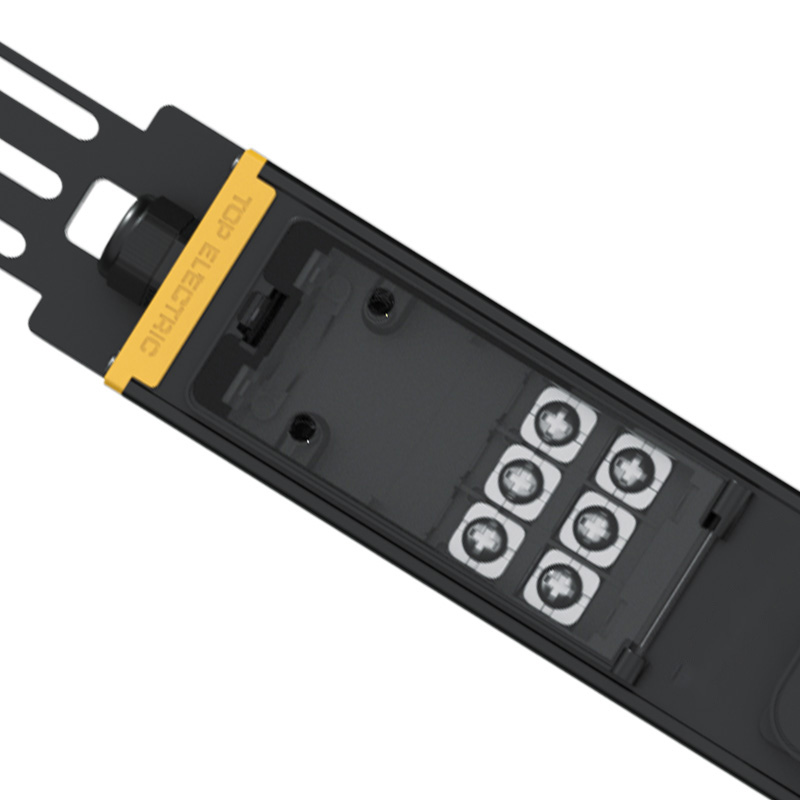
The internal components of power distribution units dictate their physical size. Three-phase units require larger internal branch circuit breakers. They also utilize thicker internal copper wiring to handle the increased amperage. These components impact the physical dimensions of the unit. Facility managers must account for this bulk when designing cabinet layouts. A unit that is too wide or deep will interfere with server rails or block access to hot-swappable power supplies.
Vertical 0U deployments mount the unit in the rear of the cabinet. This keeps the power receptacles close to the server power supplies. However, a thick three-phase 0U unit can obstruct server exhaust fans or interfere with hot-aisle containment doors. Horizontal 1U or 2U units consume valuable U-space that could otherwise house IT equipment. You must measure the exact dimensions of the chosen unit against the internal clearance of your specific server cabinets before finalizing any hardware orders.
Analyzing upfront costs requires looking beyond the hardware price tag. Three-phase units carry a higher initial CapEx. The hardware costs more due to complex internal wiring and larger breakers. The installation requires specialized electricians and more expensive copper wiring per whip. Upgrading panelboards to support three-phase output also requires significant capital investment. You have to factor in the cost of heavy-duty industrial connectors and thicker conduit runs.
However, you must evaluate long-term operational scalability. Three-phase distribution lowers the overall cost per kilowatt at scale. It defers future upgrade costs by providing massive headroom for density increases. It enables rack consolidation. You can condense three 5kW racks into one 15kW rack. This consolidation saves floor space, reduces network cabling, and optimizes cooling resources. The upfront CapEx investment pays off through sustained operational efficiency and delayed facility expansion projects.
Evaluation Metric | Single-Phase Distribution | Three-Phase Distribution |
|---|---|---|
Optimal Rack Density | Under 5kW per cabinet | 10kW to 30kW+ per cabinet |
Cabling Footprint | High volume of smaller cables | Low volume of thicker cables |
Airflow Impact | High risk of plenum blockage at scale | Minimal blockage, better thermal efficiency |
Upfront Hardware Cost | Lower initial investment | Higher initial investment |
Scalability Potential | Severely limited by breaker space | High capacity for future hardware upgrades |
Single-phase distribution remains optimal in specific environments. Telecom closets rarely require massive power draws. These small rooms house basic switches, routers, and patch panels. A single 20A or 30A circuit easily handles this equipment. Edge computing sites also benefit from single-phase setups. These remote locations often lack access to industrial three-phase utility feeds. Deploying single-phase hardware aligns with the existing building infrastructure without requiring expensive electrical retrofits.
Legacy enterprise data centers with low-density server deployments also utilize single-phase power effectively. If your facility standardizes on 3kW or 4kW per rack, upgrading to three-phase offers no immediate benefit. Maintaining the existing single-phase architecture avoids unnecessary capital expenditure. It keeps the infrastructure aligned with the actual IT load. You only upgrade when the compute hardware demands it.
Installing single-phase units is straightforward. The power cords are lighter and highly flexible. This flexibility makes routing cables through tight floor tiles or narrow overhead trays simple. The connectors, such as standard NEMA L6-30P or IEC C20 plugs, are universally understood by facility technicians. This simplicity reduces installation time and minimizes labor costs. You do not need specialized industrial electricians to plug in a standard L6-30P connector.
The upfront hardware costs remain low. Basic single-phase units lack complex internal load balancing components. You can deploy dozens of these units rapidly without straining the facility budget. For temporary deployments or rapid edge expansions, this low barrier to entry is highly advantageous. You get the power you need quickly and cheaply.
Relying on single-phase power introduces severe risks as IT demands grow. The primary limitation is panelboard space exhaustion. If rack densities increase unexpectedly, you must run additional circuits to each cabinet. A 42-pole panelboard fills up quickly when every rack requires three separate single-phase breakers. You run out of breaker space long before you run out of total facility power capacity. This forces you to install additional panelboards, which consumes valuable floor space.
Cable routing pathways also become severe bottlenecks. Adding more single-phase whips chokes the under-floor airflow. When you exhaust panel space and cable pathways, you face a costly rip-and-replace scenario. You must tear out the existing single-phase infrastructure and install three-phase panels and whips. This migration causes significant downtime and operational disruption. You have to schedule maintenance windows and power down production servers to make the swap.
Modern high-performance computing demands three-phase distribution. Hyper-scale facilities standardize on three-phase power to maximize floor space yield. AI and machine learning clusters utilize dense GPU configurations. A single AI node can draw over 5kW independently. Populating a full cabinet with these nodes pushes the power draw past 20kW. Three-phase power is the only mathematically viable way to support this density without creating a massive cabling hazard.
Dense blade server chassis deployments also require three-phase inputs. A fully loaded blade enclosure demands massive, redundant power feeds. Supplying this power via single-phase circuits requires an unmanageable number of power supplies and input cords. Three-phase distribution streamlines the power delivery directly to the chassis level. You feed the enclosure with a single high-capacity connection, and the chassis distributes the power internally to the individual blades.
Deploying three-phase hardware introduces specific physical challenges. The input cords are significantly thicker and heavier. They contain four or five heavy-gauge copper wires, often 6 AWG or 8 AWG depending on the amperage. Bending these rigid cables requires larger radius clearances in cable trays and under floor tiles. Technicians must plan cable routing carefully to avoid stressing the connectors or the unit's internal wiring. You cannot force a thick three-phase cable into a tight 90-degree bend without risking internal wire damage.
These units also require specialized industrial connectors. Facility teams frequently use IEC 60309 pin-and-sleeve connectors or heavy-duty NEMA locking plugs like the L15-30P or L21-30P. These connectors are bulky. They require adequate clearance behind the cabinet or beneath the raised floor. Installing these receptacles requires certified electricians familiar with industrial three-phase wiring standards. You must ensure proper phase rotation and ground continuity during installation.
Delivering three-phase power directly to the cabinet transforms facility management. It allows for phase balancing at the PDU level rather than at the upstream panelboard. In a single-phase environment, the electrician must manually balance the load across the A, B, and C phases at the main panel. This requires constant monitoring and complex circuit mapping. If you add a new server to a single-phase rack, you have to trace that circuit back to the panel to see which phase it impacts.
A three-phase unit handles this balancing internally. You plug the servers into designated color-coded receptacles on the unit. The unit distributes the load evenly across the three incoming phases. This internal balancing drastically reduces total cable runs. It simplifies upstream panel management and ensures the facility power grid remains stable and efficient. Any modern data center rack PDU designed for high density relies on this internal balancing to keep operations smooth and prevent upstream breaker trips.
Managing three-phase power requires precise load distribution. Unbalanced three-phase loads create severe operational risks. If you plug too many servers into Phase A and leave Phase B empty, you strand power capacity. The upstream breaker for Phase A might trip, dropping the entire cabinet, even though the total rack draw remains below the maximum rating. In Wye configurations, severe imbalances can overload the neutral wire. The neutral wire carries the unbalanced return current. If the imbalance is too high, the neutral wire overheats, creating dangerous thermal events.
Intelligent monitoring prevents these issues entirely. A smart rack PDU provides real-time data on phase balance. Technicians can view the exact amperage draw on Phase A, Phase B, and Phase C via a digital display or web interface. This visibility allows them to physically move server plugs to different receptacles, balancing the load perfectly before it reaches critical thresholds. You fix the imbalance at the rack before it causes an outage at the panel.
Intelligent units transform passive power delivery into active infrastructure management. They provide granular, outlet-level telemetry. Facility managers can monitor the exact power consumption of individual servers. This data helps identify zombie servers that draw power without processing workloads. It allows operators to optimize power usage effectiveness (PUE) by mapping exact energy consumption against compute output. You stop guessing about power draw and start managing it based on hard data.
This telemetry drives accurate capacity planning. You no longer have to guess how much power a cabinet draws. You can view historical peak loads and average consumption. This data allows you to safely maximize rack utilization. You can deploy additional servers into a cabinet with confidence, knowing exactly how much headroom remains before crossing safety thresholds. You extract maximum value from your existing power infrastructure without risking overloads.
Standalone telemetry provides limited value at scale. Intelligent units must integrate with centralized management platforms. They require SNMPv3 or RESTful API integration capabilities. These protocols feed real-time power data directly into Data Center Infrastructure Management (DCIM) software. This integration creates a single pane of glass for facility monitoring. You view the power status of thousands of cabinets from a single dashboard.
DCIM integration enables automated alerting. If a specific phase approaches 80% capacity, the system triggers an alarm to the operations team. It also facilitates historical trend analysis. Managers can track power consumption growth over months or years. This data informs future hardware procurement and facility expansion planning. It turns power distribution into a strategic data source that guides facility upgrades and hardware refresh cycles.
You must verify facility compatibility before purchasing new power distribution hardware. Upgrading a single cabinet is impossible if the upstream infrastructure lacks capacity. Facility managers must conduct a thorough electrical audit. Use the following criteria to verify compatibility:
Verify the total capacity of the upstream Uninterruptible Power Supply (UPS).
Check the existing transformer types to ensure they support the required voltage step-downs.
Audit existing panelboard configurations for available three-phase breaker slots.
Confirm whether the facility supports high-voltage distribution, such as 400/415V setups.
Measure the physical clearance in under-floor plenums for thicker cable routing.
Inspect overhead cable trays for weight capacity limits before running heavy 6 AWG copper whips.
Electrical safety is non-negotiable. All deployed hardware must meet strict regulatory standards. Verify that every unit carries valid UL (Underwriters Laboratories) or CE certifications. These marks guarantee the hardware passed rigorous thermal and electrical stress tests. Avoid uncertified, white-label hardware entirely. A catastrophic failure at the rack level can destroy millions of dollars of IT equipment and cause severe facility fires.
Pay strict attention to branch circuit protection requirements. High-capacity units must include internal, UL-listed circuit breakers. These breakers protect individual receptacle banks from overcurrent events. Furthermore, all installations must adhere strictly to local electrical codes. Consult with licensed commercial electricians to ensure proper grounding, correct wire gauges, and compliant connector installations. Do not attempt to bypass safety interlocks or use adapter cables to force incompatible plugs together.
Migrating from single-phase to three-phase in a live environment carries immense operational risk. You cannot simply unplug a production server and swap the power infrastructure. This process requires meticulous planning and phased cutovers to minimize downtime. You must map every server's dual power supplies before touching any cables.
Install the new three-phase unit alongside the existing single-phase unit in the cabinet.
Move the secondary power supply of each server to the new three-phase unit.
Verify through the server management interface that the server registers redundant power.
Move the primary power supply over to the new unit.
Monitor the phase balance on the new unit to ensure the load is distributed evenly.
Remove the legacy single-phase hardware only after the entire cabinet operates stably on the new infrastructure.
Audit the current peak power draw of your densest server cabinets using existing telemetry data to identify immediate upgrade candidates.
Consult your facility electrical engineer to map available upstream UPS capacity and verify Wye or Delta panelboard availability.
Request evaluation units of intelligent three-phase hardware to test DCIM integration and phase balancing capabilities in a staging environment.
Standardize your future cabinet procurement around a unified high-density power architecture to prevent mixed-environment complications.
A: The main difference is the number of electrical phases received and transmitted. Single-phase uses one alternating current wave, suitable for lower loads. Three-phase uses three overlapping alternating currents. This allows a three-phase unit to deliver approximately 1.7 times more power capacity at the same amperage, making it essential for high-density environments.
A: Yes. Most data center IT equipment utilizes single-phase power supplies. A Wye-configured three-phase unit distributes the incoming three-phase power into multiple single-phase receptacles, such as C13 or C19 outlets. You simply plug your standard servers into these outlets, and the unit handles the phase distribution internally.
A: It saves overall facility and cabling space, but the unit itself may be larger. By delivering more power through a single input cable, it eliminates the need for multiple single-phase cables, clearing under-floor airflow. However, the internal breakers and thicker wiring often make the physical chassis slightly wider or deeper.
A: You must consult your facility manager or electrical engineer. They will check the main utility feed, the upstream UPS systems, and the distribution panelboards. If your panelboards only have single-pole or double-pole breakers, you likely only have single-phase routed to the floor. Three-phase requires three-pole breakers and specific transformer setups.
A: Three-phase cords must house more internal wires. A standard single-phase cord contains three wires for hot, neutral, and ground. A three-phase Wye cord contains five heavy-gauge wires for three hot phases, one neutral, and one ground. These additional copper wires significantly increase the overall diameter and weight of the cable.
A: If you plug too many devices into one phase and leave others empty, you create an imbalance. This can overload a specific phase, potentially tripping the upstream circuit breaker and causing downtime. In Wye configurations, severe imbalances can also overload the neutral wire. Intelligent units monitor this to help technicians balance the load evenly.


