
Views: 0 Author: Site Editor Publish Time: 2026-07-28 Origin: Site


Procurement teams often experience sticker shock when upgrading enterprise power distribution. You cannot compare the minimal expense of consumer power strips against commercial-grade infrastructure. A commercial power ecosystem scales significantly depending on facility requirements. This investment pales in comparison to the catastrophic financial impact of unplanned downtime. Data center managers frequently struggle to accurately budget for power infrastructure. They tend to over-provision based on hardware nameplate ratings rather than actual power draw. This common mistake leads to bloated capital expenditures and stranded power capacity. The true expense of a server rack PDU is dictated by a complex matrix of capacity, intelligence, form factor, and redundancy requirements. Every feature added to the power strip increases the manufacturing cost. You must balance the upfront hardware expense against long-term operational savings. This guide provides a clear framework to align your technical power requirements with actual budget realities.
Baseline Cost Variance: Entry-level basic PDUs start in the low hundreds, while highly intelligent, high-density, three-phase models can exceed several thousand dollars per unit.
Intelligence Drives Premium Pricing: The jump from unmetered to outlet-level switched PDUs—and further to Per-Outlet Power Sensing (POPS)—represents the largest price delta, justified by remote troubleshooting capabilities and reduced truck rolls.
Redundancy Multiplies Costs: True high-availability requires an A/B power feed architecture, effectively doubling the baseline hardware and installation costs per rack.
Nameplate vs. Actual Draw: Calculating power needs based on server nameplate maximums rather than actual operational draw artificially inflates PDU sizing and procurement costs.
Understanding the primary categories of power distribution units is the first step in budgeting. Manufacturers segment their product lines based on internal intelligence and network connectivity. Each tier introduces new hardware components that directly impact the final purchase price. You must evaluate whether the features in higher tiers solve actual operational problems in your facility.
Basic units provide reliable power distribution without network connectivity. They act as industrial-grade power strips designed for high-density environments. These units feature extruded aluminum chassis and high-quality internal brass busbars. They lack digital displays, network cards, and remote management capabilities. The manufacturing cost remains low because they rely on simple, passive components.
You should deploy basic units when low cost outweighs the need for remote management. They work perfectly in environments where IT staff are always on-site. Small server closets often utilize basic models to keep infrastructure budgets lean. You sacrifice visibility into power consumption to achieve the lowest possible upfront expense. We often install these in lab environments where power monitoring is unnecessary. The lack of internal microprocessors also means there is less to fail over a ten-year lifespan.
Adding local digital displays creates a metered unit. This allows technicians to view real-time amperage draw directly on the hardware while standing in the cold aisle. Monitored units take this a step further by integrating network communication cards. These cards transmit power data over your local network via SNMP or web interfaces. The addition of microprocessors, network ports, and digital screens introduces a moderate cost increment.
This mid-range investment provides a strong return on investment for capacity planning. Facility managers use the data to balance loads across multiple phases. You can set automated alerts to warn you before a circuit breaker trips. Preventing a single overload-induced outage often pays for the network upgrade immediately. We rely on monitored units to track power usage effectiveness across different data halls. The data feeds directly into our building management systems.
Switched units introduce mechanical relays at every single receptacle. This engineering upgrade allows administrators to turn individual outlets on or off remotely. You can automate load shedding during power emergencies to keep critical servers running longer. Granular power sequencing prevents massive inrush currents when restoring power to a full rack.
The premium cost stems from the complex internal circuitry required to control high-amperage relays safely. Manufacturers use latching relays that maintain their state even if the internal management board fails. You justify this expense through the operational savings of remote reboots. Sending a technician to a remote site just to unplug a frozen server is highly inefficient. Switched units eliminate these costly truck rolls entirely. We install switched units at all edge computing sites where we have zero local IT staff.
The highest tier of intelligence involves Per-Outlet Power Sensing. These units measure voltage, amperage, and wattage at the individual receptacle level. Manufacturers must install tiny current transformers on every single outlet. This massive increase in internal components makes POPS the most expensive category available.
Colocation providers rely on POPS for strict tenant billing based on actual usage. Enterprise data centers use this granular data for advanced capacity planning. You can easily identify inefficient servers that draw power without processing workloads. The upfront hardware expense is substantial, but the data enables aggressive energy optimization. We use POPS data to charge individual business units for their exact power consumption.
Beyond network intelligence, the physical electrical specifications dictate the manufacturing expense. High-capacity power distribution requires thicker copper, larger breakers, and specialized connectors. You must match these specifications to your facility's upstream power availability.
Standard 120V systems are common but offer limited power capacity. Upgrading to 208V or 240V systems doubles the available wattage without increasing the amperage. High-voltage units require different internal wiring standards and specialized input plugs. This slight cost increase is mandatory for modern, high-density server deployments.
Three-phase power distribution introduces a significant premium over single-phase models. Three-phase units must balance power across three separate lines internally. This requires complex internal busbars and multiple banks of circuit breakers. However, three-phase power delivers massive density to a single rack. The long-term efficiency gains and reduced upstream cabling offset the higher upfront hardware costs. We always pull three-phase whips for racks exceeding 10kW of load.
Power Capacity Comparison by Phase and Voltage | |||
Configuration | Voltage | Amperage | Approximate Capacity (kW) |
|---|---|---|---|
Single-Phase | 120V | 20A | 1.9 kW |
Single-Phase | 208V | 30A | 4.9 kW |
Three-Phase | 208V | 30A | 8.6 kW |
Three-Phase | 415V | 30A | 17.2 kW |
The physical number of outlets directly impacts the build cost. A unit with 42 outlets requires significantly more internal wiring than a unit with 12 outlets. Manufacturers must also increase the length of the metal chassis to accommodate high-density configurations. You should only pay for the outlet density you actually plan to use.
Integrating an IEC C13 C19 server rack PDU configuration provides maximum flexibility. C13 outlets handle standard servers, while C19 outlets support high-draw blade chassis. Mixing these receptacles requires careful internal load balancing by the manufacturer. We typically specify a mix of 36 C13s and 6 C19s for standard enterprise cabinets.
Many modern units include integrated IEC outlet grips. These high-retention mechanisms grab the standard power cable tightly. They add marginal hardware costs to the unit but significantly reduce accidental disconnect risks. This feature often eliminates the need to purchase expensive, proprietary locking power cables for every server. We mandate locking receptacles on all new builds to prevent accidental unplugs during maintenance.
Vertical units, known as 0U, mount in the rear space of the cabinet. They do not consume any standard rack units of space. Horizontal units mount like standard servers and consume 1U or 2U of valuable real estate.
Horizontal units are generally cheaper to manufacture due to their compact size. However, they limit the number of servers you can install in the cabinet. Vertical 0U units cost more to ship and manufacture due to their length. Despite the higher price, 0U is the industry standard because it maximizes the revenue-generating space inside the rack. We only use 1U units in small network wall cabinets where vertical mounting is impossible.
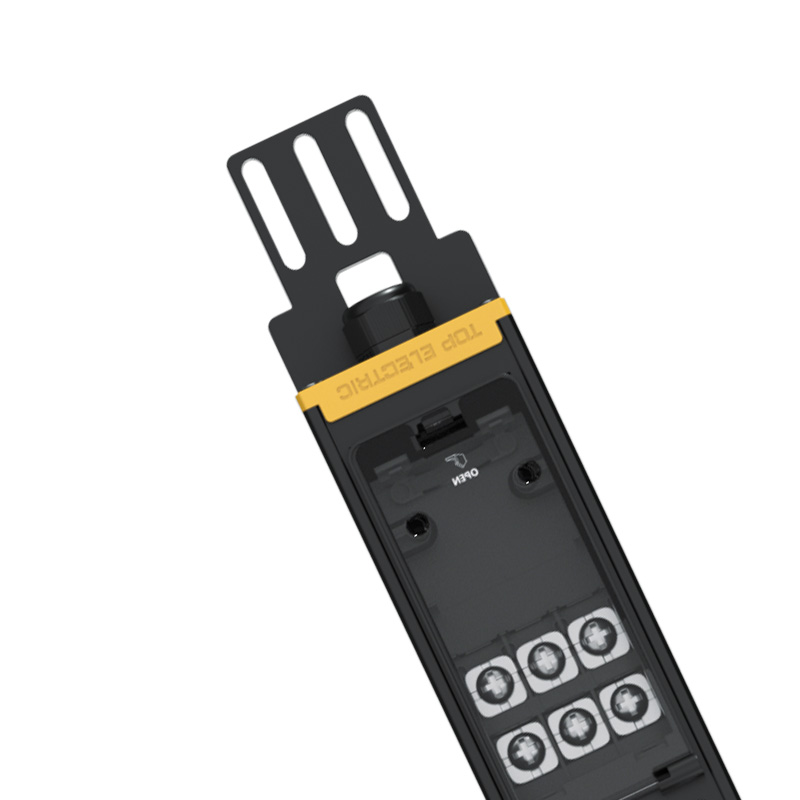
Mission-critical infrastructure demands fault tolerance at the power level. Building a resilient power architecture requires purchasing duplicate hardware. You must factor these redundancy requirements into your initial procurement budget.
True high-availability requires an A/B power feed architecture. You must provide two completely independent power paths to every dual-corded server. This means purchasing a redundant server rack PDU setup for every single cabinet. This approach effectively doubles your baseline hardware and installation costs.
Financial implications extend beyond the rack itself. A redundant setup must be paired with separate commercial UPS systems and independent upstream breaker panels. You cannot plug both the A and B units into the same upstream power source. This ecosystem requirement significantly impacts the total power budget for the facility. We color-code our A feeds red and B feeds blue to prevent cross-plugging errors on the floor.
Built-in surge protection adds internal Metal Oxide Varistors (MOVs) to the unit. These components absorb voltage spikes to protect connected equipment. Including these components increases the manufacturing cost and introduces a potential point of failure. MOVs degrade over time as they absorb minor surges.
Many enterprise data centers avoid using a surge protected server rack PDU entirely. Their power is already heavily conditioned by massive upstream commercial UPS systems. Adding surge protection at the rack level is redundant and wastes budget. However, paying for rack-level surge protection is absolutely necessary for edge deployments, telecom closets, and homelabs where upstream conditioning does not exist. We only specify surge-protected models for branch office network closets.
The purchase price of the hardware is only one part of the financial equation. Implementation realities and sizing mistakes often inflate the final project cost. You must account for these hidden expenses during the planning phase.
IT professionals frequently size power equipment based on server nameplate ratings. The nameplate indicates the absolute maximum power the server's internal supply can draw. Servers almost never operate at this maximum rating in the real world. Modern servers feature highly efficient, variable-draw power supplies.
Sizing based on nameplate ratings leads to buying higher-amperage, more expensive units than necessary. You end up paying for massive power capacity that sits idle. You should size your infrastructure based on actual measured draw under peak load. Add a 20-30% safety buffer to this measured draw to determine your true capacity requirement. We use historical UPS load data to size new cabinet deployments accurately.
Deployment labor represents a significant secondary cost. Traditional bracketed mounting requires technicians to use cage nuts and screws in tight spaces. This process is slow and labor-intensive. Modern units feature tool-less button-mount installations. Technicians simply snap the unit into pre-drilled keyholes in the cabinet. Paying a slight premium for tool-less mounting saves hours of expensive labor.
Cabling also impacts the budget. Standard power cords often create a tangled mess in the rear of the cabinet. Purchasing custom-length power cords improves airflow and organization. These specialized cables add a noticeable line item to the final deployment invoice. We order exact-length C13 to C14 cables to keep the rear exhaust paths clear.
Measure the distance from the server power supply to the PDU receptacle.
Order power cords in exact 1-foot, 2-foot, or 3-foot increments.
Route all cables along the vertical mounting rails using hook-and-loop fasteners.
Label both ends of every power cord with the corresponding server hostname.
Intelligent units generate massive amounts of data. Managing this data requires Data Center Infrastructure Management (DCIM) software. Manufacturers often charge recurring licensing fees for their proprietary management platforms. You must factor these annual fees into your operational budget.
Network integration also requires administrative time. Security teams must configure IP addresses, update firmware, and manage SSL certificates for hundreds of network cards. This ongoing maintenance represents a hidden operational cost associated with intelligent power distribution. We dedicate a specific VLAN entirely to power management traffic to isolate it from production data.
Selecting the correct unit requires a structured evaluation process. You must align the technical specifications with your specific business requirements. Avoid purchasing features that do not directly solve your operational challenges.
Start by asking critical questions about your facility operations. The answers will guide your feature selection and prevent over-spending.
Do we have remote hands on-site 24/7 to handle physical reboots?
What is the exact financial cost of one hour of unplanned downtime?
Are we billing colocation clients based on their specific power usage?
Does our facility support three-phase power at the rack location?
Will we deploy high-density blade servers that require C19 receptacles?
Do not guess your configuration requirements. Most major manufacturers provide online selection wizards and flow charts. These tools help you accurately map your power needs based on input voltage, plug type, and outlet count. Utilize these tools before requesting formal quotes from sales representatives. This proactive approach prevents vendor-led over-provisioning and keeps your budget grounded in reality. We always build a standardized spec sheet before engaging with any hardware vendor.
You must evaluate the long-term financial impact of your hardware choice. A basic unit offers the lowest upfront capital expenditure. However, it generates higher operational costs over its lifespan. Every time a server freezes, you must pay a technician to physically visit the site and pull the plug.
Conversely, a switched or POPS unit requires a significant upfront investment. This high CapEx is offset by drastically lower operational expenses. Remote troubleshooting eliminates travel time and accelerates disaster recovery. You should map your rack density and criticality to the appropriate investment tier.
PDU Tier Comparison Matrix | |||
PDU Category | Relative Upfront Cost | Network Intelligence | Ideal Use Case |
|---|---|---|---|
Basic | Lowest | None | On-site staff, tight budgets, simple closets |
Metered | Low-Mid | Local Display Only | Preventing local circuit overloads |
Monitored | Mid-High | Network SNMP/Web | Capacity planning, remote alerting |
Switched | High | Outlet-Level Control | Remote edge sites, automated load shedding |
POPS | Highest | Outlet-Level Metering | Colocation billing, strict energy auditing |
Audit your current rack power utilization using existing UPS data to establish a realistic baseline.
Consult with a facility engineer regarding upstream power availability to confirm voltage and phase support.
Request evaluation units from multiple vendors to test their management web interfaces before committing.
Standardize on a specific form factor and outlet configuration to simplify future hardware deployments.
A: Commercial units utilize industrial-grade components designed for continuous, 24/7 high-amperage loads. They feature heavy-duty metal chassis, high-retention receptacles, and thick internal busbars. The higher cost also covers network intelligence cards, digital displays, and integration with enterprise UPS systems for remote management.
A: No, enterprise data centers typically do not need rack-level surge protection. Massive upstream commercial UPS systems already condition the power and absorb voltage spikes. Rack-level surge protection is only necessary for edge deployments or telecom closets where upstream power conditioning does not exist.
A: The difference lies in the amperage rating and physical plug shape. C13 receptacles are designed for standard IT loads up to 10 amps or 15 amps depending on voltage. C19 receptacles handle high-draw equipment up to 16 or 20 amps, such as blade chassis or large network switches.
A: Never use the server nameplate maximums. Measure the actual operational draw of your equipment under peak load. Apply standard derating rules, which state you should only load a circuit to 80% of its maximum continuous capacity. This safety margin prevents nuisance tripping during minor power fluctuations.
A: Yes, if you manage remote sites without dedicated IT staff. The return on investment is easily calculated by comparing the unit's premium against the cost of sending a technician in a truck to physically reboot a frozen server. Switched units also enable automated load shedding during power failures.
A: A 0U unit mounts vertically in the rear of the cabinet, utilizing zero standard rack space. This preserves valuable real estate for revenue-generating servers. They often feature tool-less button-mount designs, allowing technicians to snap them into place instantly, which significantly reduces deployment labor costs.


