
Views: 0 Author: Site Editor Publish Time: 2026-02-02 Origin: Site


One of the most expensive errors in modern infrastructure management is confusing "structural protection" with "device protection." This fundamental misunderstanding is a primary cause of catastrophic equipment failure in telecommunications hubs and enterprise data centers. Facility managers often assume that a lightning rod installed on the roof provides a complete safety shield. In reality, that rod only protects the building’s physical shell. It leaves the sensitive microprocessors inside vulnerable to conducted transients that travel through cabling.
We must distinguish between the physical damage of a direct strike and the silent, cumulative damage of grid switching and induced surges. External protection handles the sky, but internal solutions tackle the wire. This "last mile" gap is where expensive hardware fails. To bridge this gap, operators must deploy internal systems, specifically a surge protection PDU, to filter incoming power. This article provides a technical breakdown of the differences between these technologies. It also outlines a decision framework for implementing a multi-layered defense strategy for critical infrastructure.
Scope: Lightning Arresters protect structures and insulation from direct strikes (external); Surge Arresters (SPDs) protect sensitive electronics from conducted transients (internal).
Waveforms: Lightning arresters handle high-energy 10/350μs waves; Surge arresters handle faster, lower-energy 8/20μs waves.
System Logic: Neither device replaces the other. Effective protection requires a cascaded approach ending with rack-level Enterprise PDUs.
Maintenance: Modern 20KA Hot-Swappable Surge Protection PDUs reduce TCO by allowing module replacement without powering down critical payloads.
The confusion between lightning arresters and surge arresters often stems from their shared goal: preventing electrical damage. However, their methods, placement, and engineering objectives are radically different. You can think of the lightning arrester as a shield and the surge arrester as a filter.
The primary function of a lightning arrester is to intercept direct lightning flashes. These devices are engineered to handle the "Direct Hit." When a strike occurs, the arrester creates a preferred path of least resistance. It diverts massive amounts of current directly to the earth. This action prevents the building from catching fire or physically disintegrating due to the intense heat and mechanical force of the bolt.
You will typically find these devices installed at outdoor high points. They sit atop telecommunication towers, high-voltage transmission lines, and substation gantries. Their mechanism focuses on dielectric breakdown and insulation recovery. They ensure that the air gap around a structure is not bridged by an uncontrolled arc, which could be catastrophic for the physical facility.
In contrast, a surge arrester (often called a Surge Protective Device or SPD) acts as a sophisticated filter. Its primary function is clamping voltage spikes. These spikes are rarely caused by a direct hit to the building. Instead, they arise from distant lightning induction, utility grid switching, and even internal load shedding within your own facility.
We install these devices inside distribution panels, sub-panels, and directly at the rack level. The most granular form of this protection is the Surge Protection PDU. The mechanism here relies on components like Metal Oxide Varistors (MOVs) or Gas Discharge Tubes (GDTs). These components respond in nanoseconds to short transient voltage to ground while maintaining standard 50/60Hz power flow to your servers.
The simplest way to separate these two technologies is by the source of the threat they address. Lightning arresters address atmospheric discharge originating from the sky. Surge arresters address conducted interference traveling through the wires. This includes the instability inherent in the power grid itself.
To truly understand why you cannot swap one device for the other, we must look at the physics of electricity. International standards like IEC 62305 define specific test waveforms that simulate different threat environments.
Engineers test lightning arresters (Class I protection) using the 10/350μs waveform. This wave rises to peak current in 10 microseconds and decays to 50% in 350 microseconds. It simulates a direct lightning current, characterized by extremely high energy and a relatively long duration. It is a "brute force" event.
Conversely, Class II and Class III devices, such as rack-mounted PDUs, are tested against the 8/20μs waveform. This simulates an induced surge. It has a fast rise time (8 microseconds) and a shorter duration (20 microseconds). While the total energy is lower than a direct strike, the voltage spike is sharp and fast. This is the specific threat that destroys integrated circuits.
| Parameter | Lightning Arrester (Class I) | Surge Arrester / PDU (Class II/III) |
|---|---|---|
| Target Waveform | 10/350μs (Direct Strike Energy) | 8/20μs (Induced/Switching Surge) |
| Primary Goal | Prevent structural damage/fire | Prevent data corruption/circuit failure |
| Voltage Protection Level (Up) | High (>2.5kV or 4kV) | Low (<1.5kV for logic safety) |
| Response Time | Microseconds (Gross protection) | Nanoseconds (Fine protection) |
The "let-through" voltage is a critical concept. A lightning arrester is designed to save a transformer or a building. Its voltage protection level (Up) might be 2.5kV or higher. While this prevents a fire, 2.5kV is still lethal to a server motherboard or a network switch. Sensitive communication equipment operates at logic levels of 5V, 12V, or 48V. They cannot survive the residual voltage that a lightning arrester ignores. The surge arrester reduces this residual voltage to safe levels, typically below 1.5kV for power lines, protecting the delicate transistors downstream.
Speed matters. A lightning arrester operates in the microsecond range. This is sufficient for diverting gross energy flows. However, solid-state electronics can be destroyed in nanoseconds. A surge arrester is engineered to react almost instantly (often <25ns). If you rely solely on a lightning arrester, the transient spike will destroy your equipment before the arrester even activates.
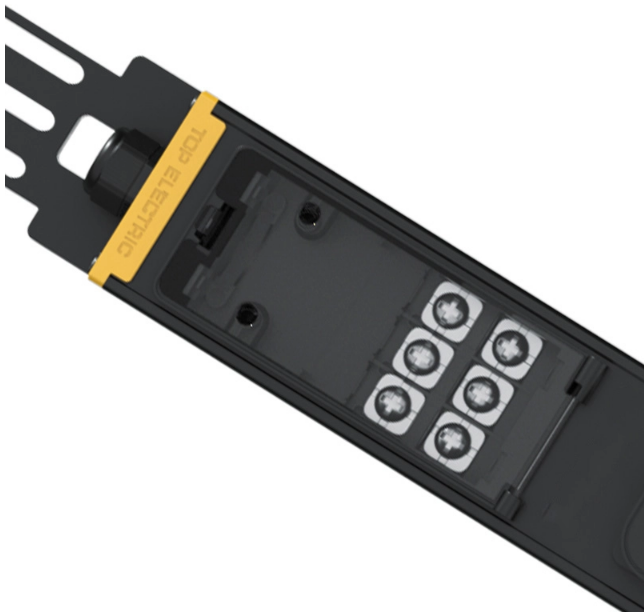
Many facility managers ask, "If I have a lightning rod, am I safe?" The answer is a definitive no. In fact, the lightning rod itself can sometimes introduce risks to internal electronics if not paired with internal surge protection.
When a lightning arrester functions correctly, it dumps thousands of amps into the earth. Ideally, this current dissipates instantly. In reality, soil resistance causes a momentary voltage spike in the grounding system itself. This is known as Ground Potential Rise (GPR).
This spike can travel back up the grounding wire and enter your equipment "through the back door." We frequently see scenarios where outdoor communication base stations suffer catastrophic damage despite having functioning lightning rods. The rod caught the strike, but the resulting ground surge fried the rectifiers and transmitters because no internal barrier existed to stop the back-feed.
Lightning does not need to hit your building to cause damage. A strike hitting the ground hundreds of meters away creates a massive electromagnetic field. This field expands rapidly, cutting across nearby power lines and data cables.
Physics dictates that a magnetic field moving across a conductor generates voltage. This induced surge travels down the power line and into your facility, bypassing the external lightning arrester entirely. Without a surge arrester at the service entrance or rack, this energy goes straight into your hardware.
The consequences of neglecting this distinction are operational, not just electrical. You face risks ranging from "fried" power supplies to corrupted databases. In telecom, logic board failure in base station signal transmitters leads to immediate coverage outages. Relying solely on external arresters is akin to wearing a hard hat but no safety goggles; you are protected from falling bricks, but not from flying dust.
To ensure business continuity, we must implement a "Fine Protection" strategy. This involves cascading defenses, with the Surge Protection PDU acting as the final, critical line of defense within the rack (Lightning Protection Zone 3, or LPZ 3).
While the main panel arresters handle the heavy lifting from the grid, the PDU protects against the residual energy that slips through. It also clamps surges generated internally by other equipment in the rack. This proximity to the load is vital. The closer the protection is to the sensitive device, the more effective it is.
In high-availability environments, maintenance cannot mean downtime. This brings us to the operational value of the 20KA Hot-Swappable Surge Protection PDU. Traditional surge strips are "sacrificial"—once they take a big hit, they fail, often cutting power to the load or leaving it unprotected.
A hot-swappable PDU changes this dynamic. If a surge module sacrifices itself to save the equipment during a thunderstorm, the facility manager can replace just that module. They do not need to unplug the servers or power down the rack. The payload remains online, ensuring continuity.
High-density environments have specific needs. Enterprise PDUs must handle substantial power loads while providing precise filtering. The requirement is twofold: the system must adapt to base station signal transmitters and communication equipment, resist voltage surges in thunderstorm weather, avoid lightning damage to equipment, and ensure uninterrupted communication.
This capability prevents nuisance tripping. A standard breaker might trip during a minor surge, taking the tower offline. A specialized Surge Protection PDU clamps the surge without interrupting the current, maintaining that elusive 99.999% uptime.
Implementing the right protection is not about buying the most expensive device; it is about architecture. Use this assessment framework to guide your decisions.
First, evaluate your environment. Is your site located in an area with a high keraunic (thunderstorm) level? Are you deploying an exposed Outdoor Communication Base Station on a remote hilltop? These factors increase the probability of direct strikes and high-energy induction, necessitating robust Type 1 and Type 2 external protection.
Do not rely on a single device. Follow the Lightning Protection Zone (LPZ) concept:
Service Entrance: Install a Type 1 SPD to handle partial lightning currents entering from the utility feed.
Distribution Panel: Use a Type 2 SPD to clamp switching surges and residual lightning energy.
Rack Level: Deploy a Surge Protection PDU (Type 3) to protect the final few meters of cabling and the sensitive logic boards.
When calculating ROI, consider the cost of downtime. A PDU might cost a few hundred dollars. Replacing a base station transmitter or a high-end server node costs thousands, not including the labor and reputational damage of an outage.
Furthermore, consider maintenance efficiency. A hot-swappable module saves labor costs. A technician can swap a module in seconds. Replacing a hard-wired panel protector requires a licensed electrician and often a scheduled power outage. Over five to ten years, the hot-swappable architecture offers a significantly lower Total Cost of Ownership (TCO).
Finally, ensure your hardware meets relevant standards such as UL 1449 and IEC 61643-11. Compliance guarantees that the MOV components will fail safely without causing a fire hazard. Proper grounding is also non-negotiable; without a solid path to earth, even the best surge protection becomes useless.
The difference between a lightning arrester and a surge arrester is the difference between saving the building and saving the business logic. Lightning arresters prevent physical destruction from atmospheric violence. Surge arresters maintain the electrical integrity required for digital operations.
Effective protection is never binary; it is a unified, coordinated system. You need the shield on the roof and the filter in the rack. For high-value assets, specifically in the telecom and data sectors, the Surge Protection PDU is not optional. It serves as the ultimate insurance policy for your hardware's lifespan, ensuring that when the sky lights up, your data centers stay dark only in the literal sense—not the operational one.
A: No. A lightning rod directs high-energy current to the ground outside your building. It does not stop surges from traveling through power lines into your equipment. In fact, without internal surge protection, the ground potential rise from a lightning strike can back-feed into your servers and destroy them.
A: Yes. Building arresters have high "let-through" voltages (>2.5kV) designed to save structures, not microchips. A Surge Protection PDU reduces this residual voltage to safe levels (<1.5kV) and protects against common internal surges caused by grid switching and load changes.
A: It means the surge protection module can be removed and replaced while the PDU is still powered on and supplying electricity to your equipment. If a module sacrifices itself to stop a surge, you can replace it without shutting down your servers or interrupting network traffic.
A: While often used interchangeably, "Surge Arrester" typically refers to industrial/utility-grade devices capable of handling high voltages at the service entrance. "Surge Suppressor" (or TVSS) usually refers to commercial or residential devices, like PDUs, used downstream to protect specific equipment at the point of use.
A: Most professional Surge Protection PDUs feature visual status indicators (LEDs) or remote monitoring capabilities. A green light typically indicates the protection is active, while a red light or an alarm notification indicates the module has degraded or failed and requires immediate replacement.


