
Views: 0 Author: Site Editor Publish Time: 2026-05-12 Origin: Site


Facility managers and IT architects frequently design new rack spaces. They often confuse or conflate the roles of power distribution and power protection when scaling infrastructure. A UPS and a PDU serve distinct, non-interchangeable purposes within any data center. One ensures continuity and regulates power quality. The other manages safe, high-density delivery directly to your servers. You cannot substitute one for the other without introducing catastrophic failure points.
We will deconstruct the technical differences, physical topology rules, and procurement considerations you face. You will learn how to architect a resilient power ecosystem safely. This guide provides the foundational knowledge needed to select the right equipment. Understanding these concepts helps you bridge the gap between backup capacity and operational distribution.
Distinct Roles: A UPS is an "active" upstream device providing temporary battery backup and power conditioning. A power distribution unit is a "passive or semi-active" downstream device distributing that power to multiple IT assets.
Topology Rule: PDUs are commonly plugged into a UPS, but the total PDU load must never exceed the UPS capacity.
Safety Over Shortcuts: Consumer power strips should never replace PDUs in a UPS environment due to surge protection conflicts and thermal risks.
Procurement Strategy: Evaluating specific rack densities often requires specialized form factors, making custom PDU services a critical consideration for enterprise deployments.
You must understand the separate engineering philosophies behind these two devices. They look similar in a rack environment. However, their internal architectures address entirely different problems.
The UPS sits at the absolute front line of your rack infrastructure. Its primary function involves providing instant battery backup during utility outages. It acts as an active defender for your delicate server components. It constantly monitors the incoming utility feed. It intervenes the moment voltage drops or spikes occur.
Beyond temporary power, a UPS acts as a sophisticated filter. It regulates severe voltage anomalies. These include sudden sags or massive swells. It essentially scrubs the dirty utility feed. It provides perfectly clean alternating current (AC) to your downstream hardware.
Different environments require different technology baselines. You generally choose between three distinct UPS topologies:
Standby (Offline): This unit passes utility power directly to the equipment. It switches to battery power when it detects an outage. You can expect a 6-8ms transfer time. This suits small office setups.
Line-Interactive: This technology includes an automatic voltage regulator. It corrects minor fluctuations without draining the battery. You will see a 4-6ms transfer time. It handles moderate grid instability well.
Online Double-Conversion: This system constantly converts AC utility power to DC. It then converts it back to pure sine wave AC. It offers a 0ms transfer time. It totally isolates your servers from utility anomalies.
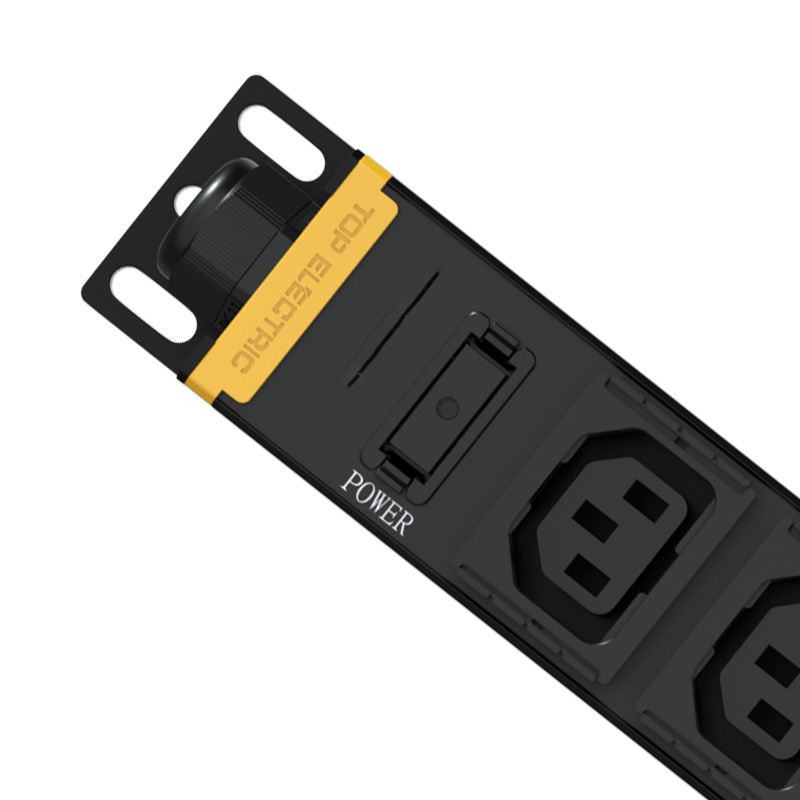
A robust power distribution unit acts as the downstream organizer. Its function centers on industrial-grade distribution. It takes a single, high-amperage output from the upstream UPS. It splits this massive electrical load safely across multiple rack-mounted devices.
You must recognize its strict limitations. A basic unit generates no power. It stores no power whatsoever. It generally relies on the upstream UPS for primary surge protection. It depends on the UPS for voltage regulation. Its job is purely organizational and structural. It ensures high currents route safely to redundant server power supplies.
We can summarize these distinct roles clearly in the comparison table below.
Feature | UPS (Uninterruptible Power Supply) | PDU (Power Distribution Unit) |
|---|---|---|
Core Function | Battery backup and power conditioning. | Splitting and delivering high-density electricity. |
Device Nature | Active (modifies and generates temporary power). | Passive or semi-active (routes power, monitors loads). |
Energy Storage | Contains heavy lead-acid or lithium-ion batteries. | Contains no batteries. |
Installation Location | Upstream, directly receiving utility or generator feeds. | Downstream, receiving power exclusively from the UPS. |
Deploying these devices requires strict adherence to physical topology rules. Randomly placing units inside a cabinet invites catastrophic system failures.
Data center power follows a highly specific data flow. The standard architecture operates in a strictly linear sequence. It begins at the utility grid. Power flows into an Automatic Transfer Switch (ATS). The ATS routes this feed into your main UPS. The UPS conditions the power and sends it to the rack PDU. Finally, the PDU distributes it to your servers and network equipment.
You cannot reverse or alter this flow. Placing a distribution strip ahead of your primary backup leaves your servers vulnerable. All distribution must happen strictly downstream from the active protection layers.
Large enterprise facilities rarely rely on a single distribution method. They employ a synergy between floor-standing systems and localized rack-mount units. Large floor-standing units distribute massive baseline power across entire server room rows. They manage the heavy power trunks.
They feed this bulk power directly into individual rack-mount distribution strips. This tiered approach maximizes your cabling efficiency. It dramatically reduces single points of failure. It keeps thick, heavy-gauge wiring under the raised floor. It delivers clean, manageable connections directly inside the server cabinet.
Facility managers often attempt to cut corners during rack deployments. They mistakenly plug cheap consumer power strips into expensive battery backup systems. This introduces severe operational hazards.
The greatest technical risk involves a surge protection conflict. Most consumer strips feature built-in surge suppression mechanisms. Plugging a surge-protected power strip into a UPS causes immediate issues. The downstream strip can bypass or confuse the filtering mechanisms of the upstream unit. This electrical conflict frequently leads to false trips. It abruptly drops your critical server loads.
IT environments operate 24/7 under extreme stress. Standard power strips possess weak build quality. They typically cap out at 15-amp limits. They are completely unrated for constant high-density server loads.
Industrial units adhere strictly to stringent Underwriters Laboratories (UL) specifications. These safety standards dictate maximum 15-foot cord limits. They enforce specific wire gauges to prevent severe overheating. Using cheap plastics and thin wires in a hot cabinet invites thermal runaway. You risk catastrophic fire hazards.
Proper deployment requires strict capacity math. You must follow the load balancing imperative. A robust distribution strip can physically handle massive amperage. However, the aggregate draw must never exceed the upstream UPS ratings.
Consider the following critical risks if you ignore load balancing:
Immediate Overload: Exceeding the Volt-Ampere (VA) rating of the upstream unit triggers an immediate bypass or shutdown.
Reduced Runtime: Running a battery backup at maximum capacity drastically reduces its emergency runtime.
Cascading Failures: A single overloaded branch circuit can trip the main breaker. This drops the entire rack during a minor utility fluctuation.
Selecting appropriate hardware requires a comprehensive evaluation framework. You must assess your specific rack density, remote monitoring needs, and physical cabinet constraints.
You must accurately assess your true total load. Buyers often confuse battery capacity with emergency runtime. Your runtime drops drastically as you approach full capacity. A unit might provide 30 minutes of runtime at half-load. That same unit may only provide 10 minutes at full-load.
Calculate the maximum wattage of all connected servers. Factor in future expansion margins. You want enough runtime to allow automated graceful shutdowns. Alternatively, you need enough time for your backup diesel generators to initialize and stabilize.
Modern distribution hardware offers varying degrees of network intelligence. You must match the device capabilities to your operational requirements.
Intelligence Level | Primary Features | Best Use Case |
|---|---|---|
Basic | Reliable power splitting, no network overhead, built-in circuit breakers. | Small network closets or strictly budget-constrained setups. |
Metered | Local digital displays, remote load monitoring, calculates Power Usage Effectiveness (PUE). | Colocation facilities needing to prevent circuit overloads dynamically. |
Switched / Smart | Outlet-level control, remote reboots, environmental sensors, IP cascading. | Remote edge data centers requiring automated, hands-off management. |
A smart unit dramatically reduces physical maintenance visits. It allows engineers to remotely power cycle a frozen server blade. It tracks cabinet humidity and temperature. It even supports daisy-chaining multiple units on one single IP address. This saves valuable network switch ports.
You must address the physical geometry and electrical phases of your setup. Single-phase circuits (120/208V) work perfectly for edge deployments and small wiring closets. High-density colocation facilities require three-phase circuits (230V+). Three-phase power delivers massively higher capacities using fewer thick cables.
Consider your mounting geometry. Horizontal mounting usually consumes 1U or 2U of valuable server space. Zero-U vertical mounting is superior for large cabinets. It attaches securely to the rear vertical posts. It saves all horizontal rack space for compute and storage hardware.
Procuring infrastructure requires careful vendor scrutiny. Buying generic hardware out of a catalog rarely satisfies complex enterprise demands.
Scaling a data center exposes the harsh realities of standard hardware. Off-the-shelf configurations routinely fail to account for specific rack geometries. They often lack proprietary locking mechanisms. For instance, Ulock outlets physically grip the power cord. They prevent technicians from accidentally kicking and unplugging critical feeds.
Standard units frequently feature non-standard cable lengths. You end up with ten feet of slack coiled unsafely at the bottom of a cabinet. This obstructs airflow and violates basic cooling principles.
You must evaluate a power distribution unit manufacturer based on their engineering agility. Look for facilities that actively offer custom PDU services. Customization allows you to tailor precise outlet counts. You can position the input cord exactly where your facility blueprints demand. You can ensure perfect phase balancing across the entire strip.
Emphasize the importance of transparent UL certifications. Demand proof of rigorous safety testing. Prioritize vendors offering robust local support. Look for designs featuring hot-swappable communication modules. Hot-swappable modules allow you to upgrade network brains without dropping power to your servers. This avoids costly future downtime.
A resilient IT environment is never a simple choice between one device or the other. It requires a strategic pairing of active protection and passive distribution. You must integrate both layers flawlessly to achieve true redundancy.
The battery backup buys you precious time. It actively protects your delicate hardware from destructive grid anomalies. Meanwhile, the distribution strip ensures that time and clean power reach your servers safely. It manages the dense, high-amperage environment intelligently.
Take immediate action to secure your infrastructure. Audit your current rack power loads today. Map out your exact voltage requirements. Consult a specialized manufacturer to close the critical gap between backup capacity and daily distribution safety.
A: No. While they both split power, PDUs feature industrial-grade components, specific branch circuit protections, remote monitoring, and are built to handle 24/7 maximum-load server environments without thermal failure.
A: Generally, no. The standard topology is Grid -> UPS -> PDU. Plugging a UPS into a PDU can cause load bottlenecks and bypass intended upstream protections.
A: Most data center PDUs omit internal surge protection to avoid conflicting with the robust surge suppression already provided by the upstream UPS.


