
Views: 0 Author: Site Editor Publish Time: 2026-02-04 Origin: Site


Most facility managers and IT professionals perceive power surges as catastrophic, rare events caused by lightning. In reality, the most dangerous threat to your infrastructure is invisible and constant. While a direct lightning strike causes immediate destruction, it is the daily, cumulative damage from internal switching transients and grid fluctuations that silently degrades electronics over time. These small, repetitive spikes erode the microscopic pathways within logic boards, leading to "unexplained" errors and premature hardware failure.
To combat this, surge protection devices (SPDs) function like a pressure relief valve on a boiler. Instead of venting steam, they divert excess voltage safely into the ground before it reaches your equipment. Understanding this mechanism is not just an engineering exercise; it is a critical component of Business Continuity Planning (BCP). For data centers and industrial environments, high-quality protection is not an accessory—it is an essential insurance policy against operational paralysis.
Internal Sources Dominate: Over 80% of surges originate internally from inductive load switching (HVAC, motors), not lightning.
Sacrificial Nature: Primary components (MOVs) degrade over time; monitoring and hot-swappable modules are critical for 24/7 operations.
Zoned Defense: Effective protection requires a tiered approach (Type 1/2 at the panel, Type 3 at the PDU) to achieve low let-through voltage.
At its core, a surge protector operates on a simple yet profound paradox. It must remain invisible to the power supply during normal operations but become the path of least resistance the instant a threat appears. This requires components that can change their physical state in nanoseconds.
Think of an SPD as a gatekeeper with a variable resistance. Under normal voltage conditions (e.g., 120V or 230V), the components inside the device maintain a high impedance. They act like an open circuit, allowing electricity to flow freely to your servers or machinery without interference. However, the moment voltage spikes beyond a specific threshold, the device switches to a low impedance state. It becomes a conductive tunnel, diverting the excess energy away from the load and into the grounding system. This rapid switching allows surge protection devices to protect sensitive logic boards without interrupting the flow of power required for operation.
Different environments require different "engines" to handle the energy load. The three primary technologies used in modern protection include:
| Component | Primary Characteristic | Best Application |
|---|---|---|
| Metal Oxide Varistors (MOVs) | Fast response time (nanoseconds) but degrades with use. | Standard rack PDUs and office electronics. |
| Gas Discharge Tubes (GDT) | High energy handling but slower reaction time. | Main service entrances and high-exposure areas. |
| Hybrid Designs | Combines GDT durability with MOV speed. | Mission-critical industrial and data center infrastructure. |
Metal Oxide Varistors (MOVs): These are the industry standard for most electronic protection. They are highly effective at clamping voltage quickly. However, MOVs are sacrificial; they absorb energy and dissipate it as heat. Over time, or during a massive spike, they can enter a state of thermal runaway. To prevent fire hazards, UL 1449 standards require thermal fusing to disconnect the MOV if it overheats.
Gas Discharge Tubes (GDT): These devices use an inert gas that ionizes to conduct electricity when voltage gets too high. They are excellent for handling the massive energy of external grid events but are often too slow to stop the fast rise-time of modern switching transients.
Hybrid Designs: For industrial units, manufacturers often combine these technologies. A GDT handles the "coarse" heavy hit, while an MOV or Silicon Avalanche Diode (SAD) handles the "fine" clamping. This balance ensures durability without sacrificing the speed needed to protect delicate circuits.
The true measure of an SPD’s effectiveness is not how much energy it absorbs, but how much it lets through. Let-through voltage is the residual voltage that passes the protector and reaches the connected equipment. For robust industrial motors, a higher let-through might be acceptable. However, for the microscopic transistors found in data center computer rooms, even a small amount of excess voltage can cause logic errors. Therefore, a lower let-through voltage rating indicates better protection for sensitive chipsets.
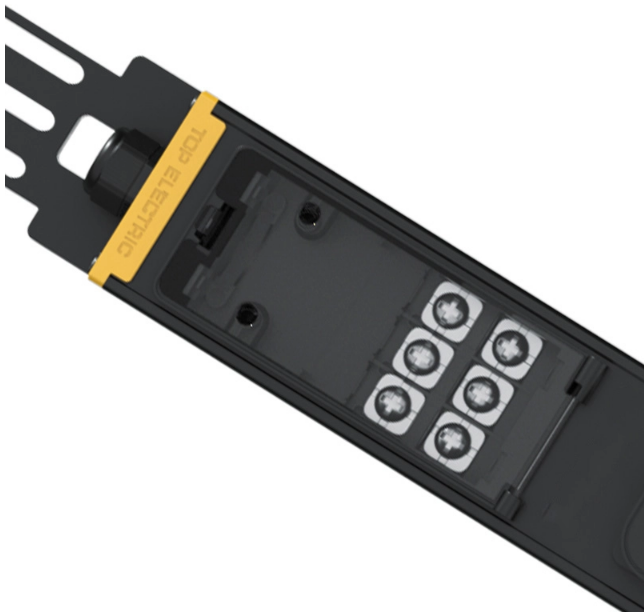
To defend your infrastructure effectively, you must understand the enemy. While atmospheric events get the headlines, the threats generated inside your own building are far more frequent and insidious.
External surges are typically high-energy events. Lightning strikes are the most obvious example. A direct strike is catastrophic, but induced surges from strikes kilometers away can still travel through power lines into your facility. Additionally, utility grid switching—where the power company switches loads between grids—can send massive ripples through the lines. These events are particularly relevant for outdoor communication base stations, where equipment is often mounted on towers or rooftops, creating maximum exposure to atmospheric discharges.
The "enemy within" is responsible for the majority of power quality issues. Every time a high-inductive load cycles on or off, it sends a back-EMF (Electromotive Force) spike into the building's wiring. Common culprits include elevators, HVAC compressors, and heavy pumps.
Technical evaluators should distinguish between Spikes and Surges. A spike typically lasts less than 3 nanoseconds, whereas a surge persists for longer than 3 nanoseconds. While a spike might seem negligible, its high frequency allows it to bypass standard filters and penetrate deep into logic circuits.
This internal bombardment leads to "electronic rust." A single internal transient might not burn out a circuit board, but thousands of them over a year will degrade the semiconductor materials. This manifests as "ghost" errors—software glitches, corrupted data, or unexplained reboots. In environments like radio and television studios, where signal integrity is paramount, this degradation can ruin broadcasts and damage expensive transmitters long before a total hardware failure occurs.
No single device can stop all surges. A robust protection strategy relies on a tiered defense, placing different types of protection at different stages of the power distribution system. This aligns with NEMA standards.
The first line of defense is at the facility entrance. Type 1 SPDs are installed on the line side of the main service entrance, before the main breaker. They act as the primary shield against external lightning currents and utility surges. Type 2 SPDs are installed on the load side, typically at distribution panels. Their job is to clamp the residual energy that the Type 1 device missed and to handle surges generated by large internal equipment.
However, relying solely on panel-level protection is a mistake. By the time the power reaches the server rack, cabling impedance can induce new voltages. This is why an industrial surge protection PDU is necessary. Facility protection reduces the energy of the surge, but it does not eliminate the high-frequency transients that damage sensitive rack equipment.
Type 3 protection is installed at the point of use, typically within the rack PDU itself. This is the last line of defense. Physics dictates that protection is most effective when it is physically close to the load. Long cables between a panel SPD and a server can act as antennas, picking up induced noise or allowing voltage to ring up due to resonance.
A rack-mounted surge protection PDU clamps these local transients immediately before they enter the power supply unit of the server or switch. This is critical in high-density setups. In mission-critical applications, facility managers increasingly specify a 20KA hot-swappable surge protection PDU. This configuration allows technicians to replace a degraded protection module without powering down the entire rack, ensuring zero downtime for the connected load.
Marketing gloss often obscures technical reality. When evaluating SPDs, ignore the flashy packaging and focus on the specifications that define performance and safety.
There is a prevalent "Joule Myth" in the consumer market. A Joule rating indicates how much energy a device can absorb before failure. While a high number sounds good, it can be misleading if the timeframe of absorption isn't specified. A device might absorb high energy but do it too slowly to save your equipment.
Professionals focus on the Surge Current Rating (kA). This measures the maximum current the device can divert during a transient event. Ratings like 20kA or 40kA indicate the robustness of the pathways inside the SPD. A higher kA rating generally implies a longer lifespan, as the device is not stressed to its limit by smaller, daily surges.
Safety is non-negotiable. The Short Circuit Current Rating (SCCR) ensures that if the SPD itself fails and causes a short, it can safely disconnect from the grid without exploding or causing a fire. This is a critical UL 1449 requirement. You must ensure the SPD’s SCCR matches or exceeds the available fault current at the point of installation.
The VPR, or clamping voltage, is the voltage level at which the SPD activates. For a standard 120V system, you typically want a VPR of 330V or 400V. If the VPR is too high (e.g., 600V), the device won't activate until the voltage is already high enough to damage sensitive components. It is a trade-off: a lower clamp offers better protection but puts more stress on the MOV.
Because MOVs are sacrificial, they will eventually wear out. In a standard power strip, a failed MOV means you must throw the whole unit away—or worse, the strip keeps working as a basic extension cord with zero protection. This is unacceptable in a data center. The solution is the modular approach. Advanced units, such as a 20KA hot-swappable surge protection PDU, feature replaceable surge modules. This allows maintenance teams to restore protection instantly without interrupting the critical power path, a feature essential for data center computer rooms requiring five-nines availability.
Even the most expensive SPD can be rendered useless by poor installation. The physics of electricity at high frequencies dictates strict rules for deployment.
The most common installation error is leaving ground wires too long or coiling them for neatness. At 60Hz, wire length adds negligible resistance. However, during a lightning strike or fast transient (high frequency), that same wire has significant impedance (inductive reactance). Industry experts like Mike Holt and IEEE consensus emphasize that every inch of lead length adds voltage drop to the system.
If your ground lead is long or coiled, the impedance will prevent the surge energy from rushing to the ground quickly enough. The result is that the voltage "backs up" and enters your equipment. The best practice is non-negotiable: leads must be as short and straight as possible. Do not create sharp bends or loops.
Cheap surge protectors often become "zombies." Their protection circuit burns out after a large spike, but they continue to conduct power. You have no way of knowing your equipment is naked until the next surge hits. Professional-grade units include audible alarms and dry contact signaling.
This status indication is particularly vital in radio and television studios. In these environments, equipment is often tucked away in soundproof racks or remote transmitter rooms where visual checks are rare. An audible alarm or remote notification ensures that a failed module is identified immediately.
When calculating ROI, do not just look at the hardware cost. Compare the price of an industrial surge protection PDU against the total cost of a downtime event. If a core switch in a data center fries, you lose the cost of the switch, the labor to replace it, and the revenue from the outage. In this context, the premium for hot-swappable, monitorable protection is a fraction of the potential loss.
Surge protection is not a single device you plug in and forget; it is a comprehensive system. It requires matching the physics of the device (MOV vs. GDT) to the specific application environment. For mission-critical infrastructure, relying on passive, generic power strips is a liability that invites disaster. Investment in compliant, tiered, and monitorable protection—specifically hot-swappable PDUs—is a baseline requirement for operational stability. We urge you to review your current power distribution architecture today and identify any single points of failure where protection is absent or outdated.
A: A power strip is merely an extension cord with multiple outlets; it offers zero protection against electrical spikes. A surge protector looks similar but contains internal components, typically Metal Oxide Varistors (MOVs), that actively divert excess voltage to the ground to prevent equipment damage.
A: Yes. The MOV components are sacrificial. They degrade slightly with every small surge they absorb. Eventually, they will fail. This is why professional units have "Protection Active" LEDs or audible alarms to indicate when the unit needs replacement.
A: The Joule rating measures the total amount of energy the device can absorb before failing. However, it doesn't tell you how fast it absorbs it or at what voltage. While a higher Joule rating suggests a longer lifespan, the Clamping Voltage and Surge Current Rating (kA) are better indicators of protection performance.
A: No device can stop a direct lightning strike, which contains millions of volts. A surge protector handles the induced surges from nearby strikes. For direct strike protection, a facility needs a structural lightning protection system (lightning rods) combined with Type 1 facility-level SPDs.
A: In critical environments like data centers, you cannot afford to unplug a server rack just to replace a worn-out surge protector. A hot-swappable module allows you to remove and replace the protection unit while the PDU remains live and powering the equipment, ensuring 100% uptime.


